
Sampling is one of the biggest hidden delays in fashion sourcing.
A buyer may have a strong design, clear launch plan and confirmed retail calendar.
But if the sample takes too long, the full production calendar starts slipping.
For Hong Kong buyers, this is especially important because many brands work with short selling windows, marketplace testing, pop-ups, capsule drops and fast decision cycles.
A slow sample process can delay photoshoots, buying meetings, pre-orders and final bulk approval.
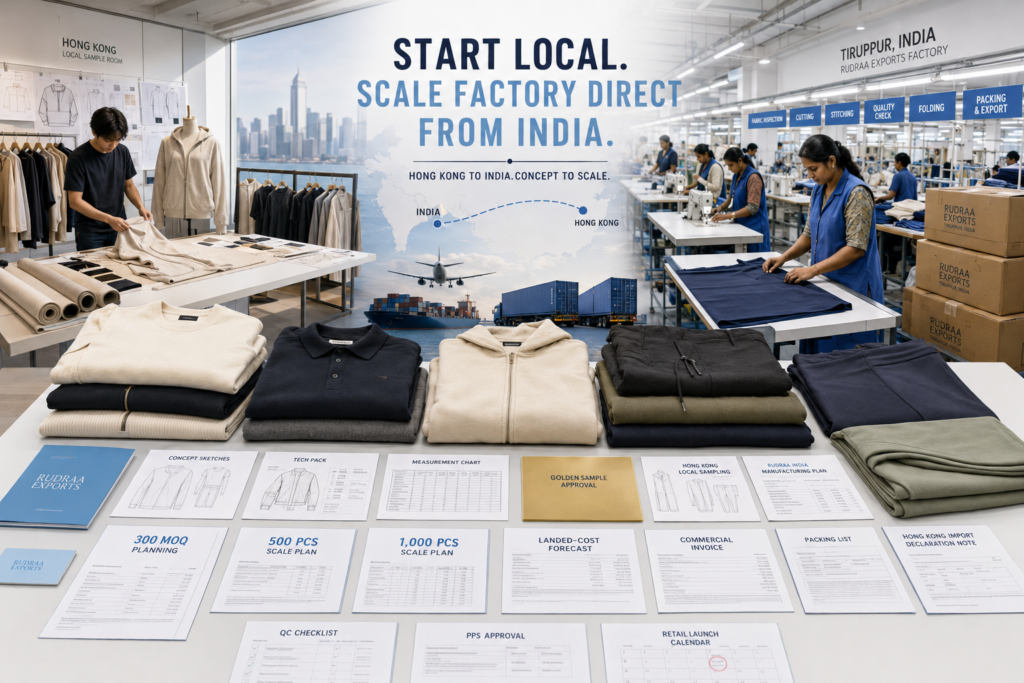
At Rudraa Exports, we help Hong Kong buyers move faster from sample request to bulk production through a structured sampling workflow from Tiruppur, India. Rudraa supports sample production planning, paid refundable sample discussion, DHL/FedEx express courier options, buyer evaluation checklists and bulk transition from 300 pcs starting MOQ.
Quick Answer
Hong Kong buyers can order garment samples from Rudraa Exports by sharing a tech pack, reference sample or clear product brief. Rudraa reviews the garment type, fabric, trims, measurements and sample purpose, then plans sample production, courier delivery and buyer approval. Sample production can be planned around 5–7 days when inputs are complete and materials are available, followed by express delivery to Hong Kong. Bulk production starts from 300 pieces MOQ after sample approval.
Why Sampling Matters
Sampling is not just a preview.
It is the point where the buyer checks whether the factory understands the product.
A good sample helps confirm:
- Fit
- Fabric
- GSM
- Stitching
- Print placement
- Embroidery quality
- Shrinkage risk
- Label position
- Trims
- Packing method
- Bulk feasibility
The uploaded source explains that sampling often becomes a bottleneck because sample development can take longer when fabric readiness, complexity and revisions are not controlled.
What Hong Kong Buyers Should Decide Before Ordering a Sample
Fast sampling starts before the factory begins stitching.
Buyers should confirm the right details at the beginning.
1. Garment Type
Specify the exact product.
Examples:
- T-shirt
- Polo shirt
- Hoodie
- Jogger
- Sweatshirt
- Woven shirt
- Loungewear set
Simple knitwear samples can move faster than technical garments with many trims or construction details.
2. Tech Pack
A tech pack should include:
- Measurement chart
- Points of measure
- Tolerances
- Fabric composition
- GSM
- Stitch type
- Print placement
- Label details
- Packing instructions
- Artwork files
- Size grading intent
The uploaded source highlights incomplete tech packs as one of the common reasons sampling delays and revision loops increase.
3. Reference Sample
A physical reference sample is useful when the buyer wants to match hand feel, fit, stitch density or construction.
Photos can help, but a physical reference gives better clarity.
This reduces guesswork between buyer and factory.
4. Fabric and Trims
Confirm fabric and trims early.
Sampling delays often happen when the buyer is still unsure about:
- Cotton type
- GSM
- Knit structure
- Rib quality
- Zippers
- Drawcords
- Labels
- Print method
- Embroidery thread
If the fabric is standard and available, sampling moves faster.
If special fabric needs sourcing or dyeing, timelines may increase.
5. Sample Purpose
Not all samples are the same.
A buyer should define whether the sample is for:
- Fit approval
- Photo shoot
- Buyer meeting
- Size-set review
- Pre-production approval
- Construction check
- Fabric hand-feel check
The uploaded source explains that sample purpose matters because a photo sample and a bulk-representative sample may need different standards.
Rudraa’s Paid Refundable Sample Model
Sample orders should be taken seriously by both buyer and factory.
Rudraa’s sample discussion can be structured as a paid sample, with the sample fee refundable or adjustable against the bulk order based on the agreed condition.
This helps both sides stay committed.
The buyer gets a serious sample workflow.
The factory can allocate time, material and production attention.
Before paying, confirm:
- Sample cost
- Sample quantity
- Refund condition
- Refund adjustment method
- Courier charges
- Sample timeline
- Bulk MOQ
- Sample approval process
The uploaded source explains that a paid and refundable sample policy helps align incentives and protect the buyer’s development spend when the bulk PO is placed.
Sample Timeline for Hong Kong Buyers
Rudraa can plan sample production around 5–7 days when:
- Tech pack is complete
- Fabric is available
- Trims are confirmed
- Construction is not highly technical
- Buyer response is fast
- No major revision is needed
After sample production, express courier to Hong Kong may take around 2–3 business days, depending on carrier, holidays, clearance and service selection.
The uploaded source mentions DHL Express and FedEx International Priority as delivery options for Hong Kong sample shipments.
Sample Shipping: DHL, FedEx, DAP and DDP
For samples, buyers can discuss courier options such as:
- DHL Express
- FedEx International Priority
Shipping terms should also be clear.
DAP
DAP means the seller arranges delivery to the destination, but the buyer may handle import charges or local obligations where applicable.
DDP
DDP means the seller handles more of the delivery and clearance responsibility as agreed.
Hong Kong is generally simple for garment samples because apparel usually has no import duty, but courier paperwork must still be accurate.
What to Check When the Sample Arrives
A fast sample is only useful if the buyer reviews it quickly.
Hong Kong buyers should evaluate the sample within 24–48 hours.
Fit and Measurement
Check:
- Chest
- Shoulder
- Length
- Sleeve
- Armhole
- Waist
- Inseam
- Hem
- Tolerance
Compare measurements against the tech pack.
Construction
Check:
- Stitch type
- Stitch density
- Seam strength
- Seam allowance
- Neck rib
- Side seam twist
- Thread colour
- Loose threads
- Press marks
Fabric
Check:
- GSM feel
- Hand feel
- Stretch
- Shrinkage risk
- Pilling risk
- Colour accuracy
- Fabric recovery
Branding
Check:
- Print placement
- Embroidery position
- Label placement
- Heat transfer quality
- Hang tag placement
- Wash-care label
- Brand trims
Packing
Check:
- Polybag size
- Barcode label
- Carton marking
- Fold method
- Retail presentation
The uploaded source gives a buyer-grade sample evaluation checklist covering fit, construction, materials, trims, branding, finishing, packaging and lab tests where needed.
How to Give Feedback
Feedback should be clear and visual.
Send:
- Measurement sheet
- Photos
- Marked-up corrections
- Must-fix list
- Nice-to-fix list
- Final approval decision
Do not write vague comments like “make it better” or “fit is not nice.”
Instead, write:
- Chest width needs +1.5 cm
- Sleeve length reduce by 1 cm
- Neck rib should be tighter
- Print should move 2 cm lower
- GSM feels too light; move from 180 to 200 GSM
Clear feedback reduces revision time.
Moving from Sample to Bulk
After sample approval, the buyer should lock:
- Final tech pack
- Final fabric
- Final GSM
- Final size chart
- Final trims
- Final print or embroidery
- Final packing
- Bulk quantity
- Payment terms
- QC gates
- Shipment plan
Rudraa Exports’ MOQ starts from 300 pieces.
Buyers can plan:
- 300 pcs first bulk order
- 500 pcs repeat or scale order
- 1,000 pcs stronger production program
A 300 pcs first order is practical for Hong Kong buyers who want controlled market testing without moving into overstock.
Best Fit for Rudraa Fast Sampling
Rudraa’s fast sample workflow is a strong fit for:
- T-shirt buyers
- Polo shirt buyers
- Hoodie brands
- Jogger brands
- Loungewear programs
- Hong Kong streetwear brands
- Boutique retailers
- Private-label brands
- Buyers with clear tech packs
- Teams that can approve quickly
Not the Best Fit
Fast sampling may not be ideal when:
- Design is still unclear
- Fabric is not final
- Technical construction is complex
- Lab testing is required before approval
- Buyer needs many revisions
- Internal decision-making is slow
- Quantity is below serious production MOQ
In these cases, a staged sample plan is better.
Start with construction sample first, then final PPS after key decisions are locked.
7-Step Sample-to-Bulk Roadmap
Step 1: Send Sample Request
Send tech pack, reference image, sample purpose, fabric requirement and target delivery date.
Step 2: Confirm Feasibility
Rudraa reviews garment type, complexity, fabric and trims before confirming sample plan.
Step 3: Pay Sample Fee
Confirm paid sample cost, courier cost and refund or adjustment rule against the bulk order.
Step 4: Produce Sample
Rudraa prepares the sample based on approved inputs.
For clear and simple knitwear programs, production can be planned around 5–7 days.
Step 5: Ship to Hong Kong
Use DHL or FedEx express courier depending on buyer preference and shipping scope.
Track the parcel until delivery.
Step 6: Evaluate Within 48 Hours
Check measurement, fit, fabric, construction, print, trims and packing.
Send clear feedback quickly.
Step 7: Move to Bulk
Approve final sample, lock bulk specs and start production from Rudraa’s 300 pcs MOQ.
FAQ
1. How long does a garment sample take from India to Hong Kong?
For clear and simple knitwear programs, Rudraa can plan sample production around 5–7 days when fabrics, trims and tech packs are ready.
After production, express courier delivery to Hong Kong may take around 2–3 business days, depending on carrier, holidays and clearance conditions.
2. Is Rudraa’s garment sample free?
Rudraa’s sample can be handled as a paid sample, with the fee refundable or adjustable against the bulk order based on the agreed condition.
This helps keep the sample process serious while protecting the buyer’s development cost when they move forward with production.
3. What should I send before ordering a sample?
You should send a tech pack, measurement chart, fabric details, GSM, artwork, label instructions, packing notes and reference sample photos if available.
The clearer your inputs are, the easier it is for the factory to avoid revision loops and keep sampling timelines controlled.
4. What is Rudraa Exports’ MOQ after sample approval?
Rudraa Exports’ MOQ starts from 300 pieces, depending on product, fabric, colour, trims and complexity.
This MOQ is suitable for serious first production because it supports proper fabric planning, trims, QC, packing and export preparation.
5. Which products are best for Rudraa’s sample workflow?
Rudraa’s sample workflow is best for knitwear products such as T-shirts, polos, hoodies, joggers, sweatshirts and loungewear.
These products match Tiruppur’s knitwear ecosystem and can move faster when the buyer provides a clear tech pack and approves quickly.
Conclusion
For Hong Kong fashion buyers, sampling should not be treated as a casual first step.
It is the foundation for bulk production.
A clear sample request, complete tech pack, defined sample purpose, fast courier plan and structured evaluation checklist can save weeks of delay.
Rudraa Exports helps Hong Kong buyers move from request to sample to bulk through a direct Tiruppur factory workflow, 5–7 day sample production planning where suitable, DHL/FedEx courier options, paid refundable sample discussion, buyer-grade evaluation checklists and 300 pcs starting MOQ for production.
Visit rudraaexports.com or contact Rudraa Exports to request a garment sample and bulk production plan for your next Hong Kong sourcing program.